China’s lithium-ion battery industry is often described through rankings, but a manufacturer’s position tells only part of the story. For buyers, the details matter: cell chemistry, production scale, safety testing, service life, and the consistency of each batch. A battery’s label may promise impressive capacity. Real performance depends on how the cells behave under repeated charging, heat, and demanding use.
This guide to China’s top 10 manufacturers examines those practical differences. It considers established suppliers and fast-growing companies, while distinguishing public claims from measurable strengths. Battery Lithium Ion products serve electric vehicles, energy storage systems, and portable equipment; each application brings different priorities. A vehicle maker may value high energy density, while a storage project may focus more on durability and predictable output. No single supplier is best for every project.
Battery researcher Jeff Dahn’s published work highlights how cell materials and design shape battery performance. That lesson is useful here: compare evidence, not just marketing language. Yet rankings have limits. Data changes, product lines vary, and supplier capabilities can differ by factory. This introduction is a starting point, not a verdict. The sections ahead look at leading manufacturers, their specialties, and the questions buyers should ask before choosing a partner.
China’s top ten lithium-ion battery makers should be assessed through a clear, evidence-based scope. This list focuses on manufacturers with substantial production in China. It considers cells, battery packs, and energy storage systems. Automotive and industrial applications receive more attention than small consumer batteries.
The ranking criteria combine annual capacity, verified shipment data, product safety, and manufacturing consistency. Research investment also matters, especially in cell chemistry, thermal control, and fast charging. Reliable suppliers should show testing records, quality certifications, and stable delivery performance. Financial transparency and recycling practices strengthen their credibility. However, public data is often incomplete or reported differently. A capacity figure may describe planned factories, not operating output. That weakness deserves careful review.
Tips: Compare operating capacity with announced capacity. Check independent test reports and warranty terms. Ask whether production supports your required chemistry, format, and temperature range. Visit a facility when possible, and inspect sample cells for labeling, weld quality, and swelling. Do not rank suppliers by scale alone. A smaller producer may offer better traceability, while a large producer may struggle with customization. Regional regulations and transport requirements can also change the final choice. My ranking would remain provisional until shipment records and factory audits are verified.
China’s lithium-ion battery industry reached about 940 GWh of output in 2023, according to figures associated with the Ministry of Industry and Information Technology. This scale places China at the center of global battery manufacturing. It also changes how readers should interpret “top 10” manufacturers. Factory volume alone cannot prove quality, safety, or long-term reliability.
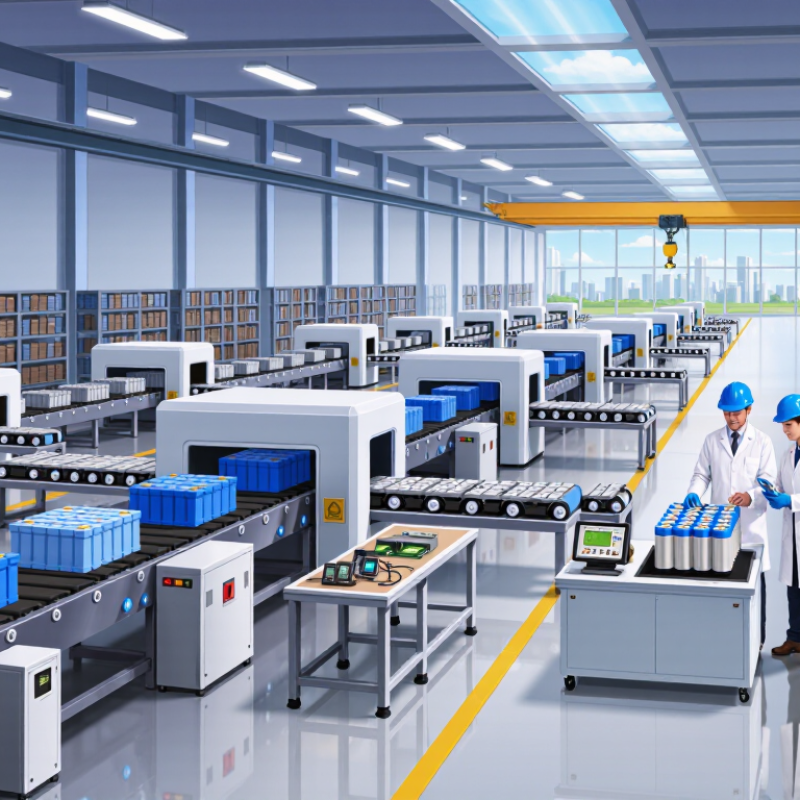
A practical evaluation should examine cell chemistry, energy density, cycle testing, production traceability, and delivery consistency. Engineers may review inspection records, temperature-control data, and sample performance under repeated charging. On a factory floor, small details matter: dry-room humidity, electrode coating accuracy, and dust control can influence battery consistency. These checks require technical experience.
Output numbers still need caution. GWh measures production volume, not necessarily usable capacity in vehicles or storage systems. Some figures may include different product categories, making direct comparisons imperfect. That is a weakness worth acknowledging. A credible comparison of China’s leading ten manufacturers should therefore combine MIIT statistics with audited capacity, independent testing, defect rates, and verified customer applications. Public rankings can shift quickly as new plants begin production. Regional policy, raw-material access, and overseas certification also affect real market strength. Big numbers attract attention. Evidence deserves more.
China’s lithium-ion battery industry output increased from approximately 324 GWh in 2021 to more than 940 GWh in 2023. The figures represent industry-wide lithium battery production and do not identify individual companies or brands.
Source: China Ministry of Industry and Information Technology (MIIT), publicly reported annual industry figures.
China’s leading lithium-ion cell manufacturers compete through scale, chemistry, and production discipline. In supplier assessments, the strongest factories show clean dry rooms, automated welding, and traceable batch records. These details matter more than impressive capacity figures.
One leading manufacturer focuses heavily on large prismatic cells for electric vehicles and energy storage. Its advantages include extensive production capacity, strong thermal management, and mature quality systems. Another combines battery cells with vehicle and storage integration. This approach can shorten development cycles and improve system compatibility. A third emphasizes standardized cells, fast charging, and partnerships with vehicle producers. Its flexible product range supports different pack designs, though customization may increase engineering complexity.
Cell chemistry changes the comparison. Lithium iron phosphate cells often provide strong safety performance and long cycle life. Nickel-rich cells can deliver higher energy density, but they require tighter thermal control. Buyers should examine independent test data, not only factory claims. Useful indicators include capacity retention after repeated cycles, charging performance at low temperatures, and consistency between production batches.
My comparison has limits. Public data rarely reveals every failure rate or warranty condition. A factory may look excellent during one visit and perform differently during peak demand. Procurement teams should request sample testing, audit production records, and review field-service data before signing long-term agreements. Small differences in electrode coating or sealing can become expensive problems later.
China’s lithium-ion battery industry includes several major manufacturers serving electric vehicles, energy storage, and portable electronics. The seven companies highlighted in this market are known for different strengths, rather than one universal advantage. Some focus on high-volume automotive cells, while others develop compact batteries or storage systems for commercial sites.
A serious buyer should examine chemistry, energy density, cycle life, and thermal management. Manufacturing consistency also matters. A battery can look impressive on paper but perform poorly after repeated charging in hot conditions. Factory audits, sample testing, and traceable quality records provide stronger evidence than promotional claims. Cell dimensions, cooling paths, and warranty terms deserve close attention.
Details matter most.
Cost is another practical concern. Lower prices may reflect simpler packaging, fewer validation tests, or limited after-sales support. The best choice depends on the application, operating temperature, charging pattern, and required service life. Industry rankings can guide early research, but they are not permanent facts. Production capacity changes, technologies improve, and supply agreements shift. I would also question any comparison that reports only maximum capacity. Real-world efficiency, safety testing, and degradation data often tell a less comfortable story.
China’s top ten lithium-ion battery manufacturers are not ranked by factory size alone. Scale matters. The strongest comparison combines shipment volume, usable capacity, chemistry, safety, and regional reach. According to the International Energy Agency’s Global EV Outlook 2024, global electric-vehicle battery demand exceeded 750 GWh in 2023. China supplied most of the world’s battery cells and represented nearly 60% of global electric-car sales.
Market share can therefore reward manufacturers with dense local supply chains. SNE Research reports that China-based producers held a dominant share of global electric-vehicle battery usage in recent years. Yet shipment leadership does not guarantee the best technology.
Lithium iron phosphate cells offer lower cost and strong thermal stability, while nickel-rich cells generally provide higher energy density. Chemistry changes rankings. A supplier serving buses may prioritize cycle life, while a premium vehicle program may demand longer driving range.
Price data adds another layer. BloombergNEF reported an average lithium-ion battery pack price of 139 dollars per kWh in 2023, with lithium iron phosphate packs costing less than nickel-based alternatives. This gap can reshape market share quickly. Still, rankings remain imperfect because public reports measure shipments differently. Some count cells, others count battery packs or contracted capacity. A better assessment should examine factory utilization, defect control, recycling readiness, and customer diversity. The industry still lacks one fully consistent scoreboard.
Compare verified shipments, operating capacity, safety records, consistency, and research investment. Factory size alone is not enough.
China’s lithium-ion battery output reached about 940 GWh in 2023. That figure reflects production volume, not necessarily usable capacity in vehicles or storage systems.
No. Check independent test results, defect records, and delivery performance. Scale is not proof.
Lithium iron phosphate cells can offer lower cost and strong thermal stability. Nickel-rich cells generally provide higher energy density. The better fit depends on the application.
Look at dry-room humidity, electrode coating, dust control, and production traceability. Inspect sample cells for clear labels, clean welds, and swelling.
Some figures include planned factories rather than operating production. Reports may also count cells, packs, or contracted capacity differently.
Review usable capacity, cycle testing, temperature-control data, customer diversity, and recycling readiness. A small supplier may offer better traceability, but that needs verification.
In 2023, the reported average pack price was about $139 per kWh. Lower-cost chemistries can shift market share, though price alone says little about quality.
Public data is incomplete, and new factories can change production quickly. I would want audited figures before trusting a fixed list.
China has become a major force in the global lithium-ion battery industry, supported by strong manufacturing capacity, expanding electric vehicle demand, and large-scale energy-storage projects. This article examines the country’s leading cell producers through practical criteria such as production scale, technology development, product consistency, market reach, and investment in future capacity. It also places the industry in the context of China’s reported 940 GWh battery output in 2023, highlighting the rapid growth of the domestic supply chain.
The comparison considers how different manufacturers compete across electric vehicles, consumer electronics, and stationary storage. It explains the importance of battery chemistry, including lithium iron phosphate and nickel-based technologies, as well as the effects of manufacturing scale and market share on overall rankings. Readers will gain a clear understanding of why China is central to Battery Lithium Ion production and how cost efficiency, safety, innovation, and global expansion continue to shape competition among its leading manufacturers.

Liao Battery